Games Night in Your Apartment: Small Boxes, Memorable November Evenings
A pack of cards or a pocket-sized game can turn a November evening into quality time together. Here are a few easy-to-pack favourites and simple ideas for a relaxed games night in your apartment.
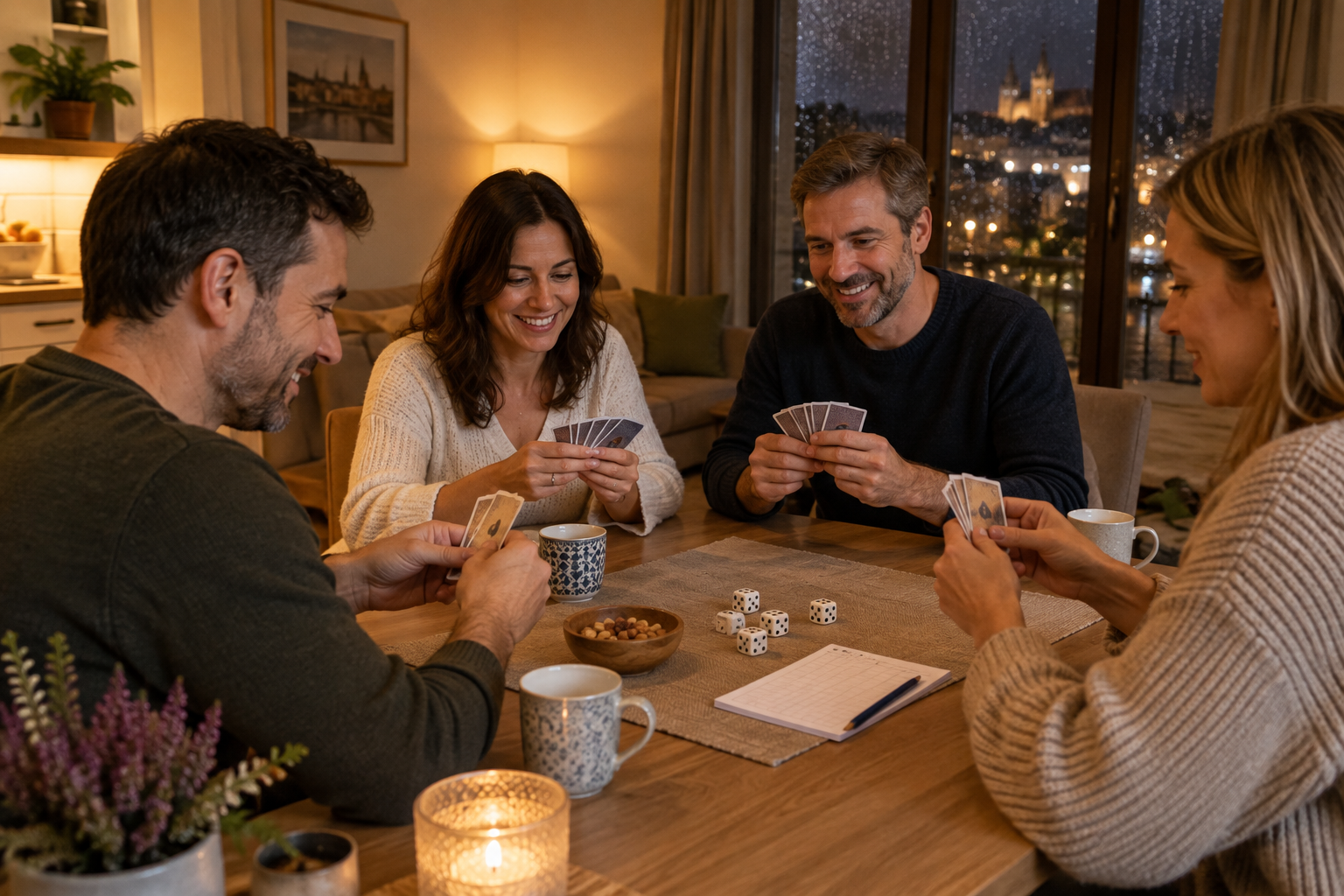
In November, there comes a point in the day when another outing feels less appealing than settling in for a quiet evening together. It can be one of the loveliest parts of a break in Bükfürdő: there is no departure time to keep an eye on, and always room for a chat before the next round.
You do not need to pack bulky boxes for a games night. A well-chosen card game, a few dice or even just paper and pencils can be enough. What matters is not the size of your collection, but choosing something that suits your mood that evening.
What makes a good game for an evening in?
The most practical travel games take up little luggage space, are quick to set up and do not need a huge table. It also helps if you can easily pick up where you left off after stopping for a chat.
- Choose for your actual group size: a favourite with friends may not work quite as well with just two players.
- Keep the opening game simple: a lengthy explanation of the rules can drain the evening's momentum.
- Match your energy levels: when you are tired, a light symbol-spotting game may be more appealing than a complex strategy game.
- Check your edition: player numbers and recommended ages can vary, so follow the guidance on your own box.
Bring a familiar favourite and something new. That way, you have a reliable fallback if nobody feels like learning fresh rules.
Five easy-to-pack game ideas
1. A standard pack of cards: plenty of possibilities in one small pack
A standard pack of playing cards gives you options for leisurely games, chatty games or games that need your full attention. For two, you could try rummy if you know a two-player version. With a larger group, bring out a family favourite everyone knows.
The most useful preparation is agreeing on the rules. What can you lay down, when can you finish and how will you score? Settle these questions before the first deal, rather than getting caught up in a debate about how everyone has always played it.
2. Dobble: for getting straight into the fun
Dobble, which revolves around spotting matching symbols, makes a good warm-up. It needs little preparation and soon reveals how sharp your eyes are that day. It suits an evening when you would rather laugh than spend ages planning your next move.
If someone finds the race against other players uncomfortable, try a few practice rounds without keeping score. With children, you can look for matching symbols together before moving on to your chosen version of the game. There is no need to shout: pointing and naming the symbol works too.
3. Hanabi: working together rather than competing
The twist in Hanabi is that you can see everyone else's cards, but not your own. You work together to make good decisions, using limited information and clues from one another. It is a compact option for anyone who prefers working towards a shared goal.
Resist the temptation to let one person direct everyone else's moves. Much of the enjoyment comes from each player drawing their own conclusions from the information they receive. This is a game for paying attention, rather than playing alongside an ongoing conversation.
4. Love Letter: a few cards, plenty of guesswork
Love Letter uses a small set of cards for a game of deduction and risk-taking. It is a good choice if you enjoy watching one another's decisions and wondering what someone might be holding.
Editions can differ, so check before travelling that your version suits your group size. The fresh start between rounds also leaves room for a short break: you do not have to shape the whole evening around one long game.
5. Five dice and a score sheet
For dice poker, all you need is five standard dice, paper and a pencil. Collecting different combinations is a simple idea, but there are still decisions to make: keep a safe result, or roll again in the hope of something better?
Agree on the scoring beforehand, as there are several variations. Rolling onto a folded cloth can soften the noise and help stop the dice travelling too far.
If you have not brought any games
Twenty Questions needs no equipment at all. Choose a shared theme, such as animals, objects or films, and work towards the answer with yes-or-no questions. A narrower theme is particularly helpful when your interests are very different.
With paper and pencils, try a categories game: choose a letter and think of a country, a city and other answers beginning with it. Add your own categories, such as food, fictional characters or things you might use on a trip. Agree beforehand on what counts as an acceptable answer, and whether you want to compete at all.
For a quieter finish, try telling a story together, with each person adding one sentence. There does not have to be a winner, and the strangest twists often become shared jokes you remember long afterwards.
Keep it relaxed, not compulsory
Start with an easy practice round, then decide what you feel like doing next. Nobody needs to commit to a rematch, and you can leave out the scoring if you would rather chat. With a mix of ages, working in pairs for the first round can help.
Keep drinks away from the cards, and save your phone for checking rules. Bring your own games and any equipment you need, so you know you will have something you enjoy. Sometimes the best way to finish is simply to play one last pleasant round, then put the cards away.
Make room for November evenings together
Choose Apartman Brigitte for your stay in Bükfürdő, and pack a favourite game for the evening. Explore the available options and book directly online for your next break together.